

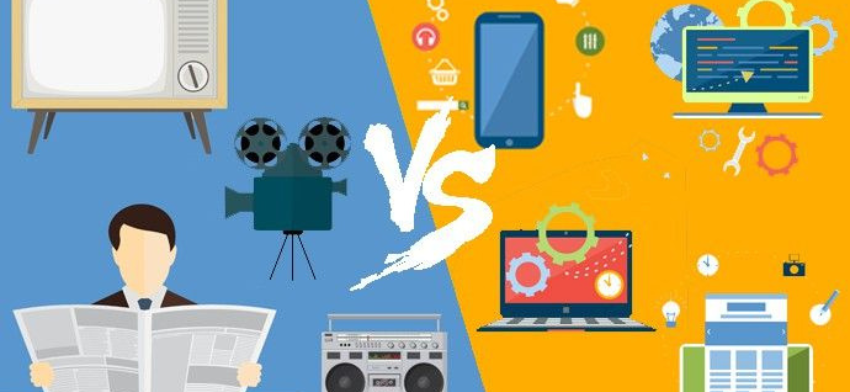
Performance Marketing vs Traditional Marketing: What Drives Real Growth for FMCG?
The FMCG industry has always relied heavily on marketing to drive demand. From television ads and newspaper campaigns to billboards and retail promotions, traditional marketing has played a crucial role in building brand awareness.
However, in today’s digital-first environment, performance marketing is rapidly transforming how FMCG brands generate measurable growth.
The key question for modern FMCG companies is not whether to market — but which marketing approach delivers real, scalable, and measurable growth.
Understanding Traditional Marketing in FMCG
Traditional marketing includes:
- Television commercials
- Newspaper and magazine ads
- Radio promotions
- Hoardings and billboards
- In-store branding and activations
- Trade marketing activities
These channels are powerful for mass awareness. Large FMCG brands have historically used them to build brand recall across cities and rural markets.
Strengths of Traditional Marketing
Traditional marketing excels in brand visibility and trust-building. Television and outdoor advertising create strong recall and help brands appear established and credible.
However, traditional marketing often lacks precise tracking and measurable ROI. It is difficult to determine exactly how many sales came directly from a newspaper ad or billboard campaign.
What is Performance Marketing?
Performance marketing is a digital-first strategy where brands pay for measurable actions such as:
- Clicks
- Leads
- Conversions
- App installs
- Purchases
It includes channels such as:
- Social media advertising
- Google search and shopping ads
- Marketplace advertising
- Influencer campaigns
- Retargeting campaigns
- Email and WhatsApp automation
Unlike traditional marketing, performance marketing focuses on data, tracking, and measurable outcomes.
ROI: Measuring the Real Impact
Traditional Marketing ROI
Traditional campaigns often measure success through estimated reach and impressions. While they increase brand awareness, linking them directly to revenue is challenging.
Performance Marketing ROI
Performance marketing provides clear metrics such as:
- Cost per acquisition (CPA)
- Return on ad spend (ROAS)
- Conversion rate
- Customer acquisition cost (CAC)
- Lifetime value (LTV)
This data allows FMCG brands to optimize campaigns in real time and allocate budgets efficiently.
Scalability and Budget Efficiency
Traditional marketing usually requires large upfront budgets. Television ads, print media, and outdoor campaigns demand high production and placement costs.
Performance marketing, on the other hand, is highly scalable. Brands can start with smaller budgets, test campaigns, analyze results, and gradually increase investment in high-performing ads.
Speed of Optimization
In traditional campaigns, once an ad is released, changes are difficult and expensive.
Performance marketing enables real-time optimization. Ads can be paused, modified, or scaled instantly based on performance data.
Brand Awareness vs Direct Sales
Traditional marketing is powerful for building mass awareness and long-term brand equity.
Performance marketing drives direct response actions such as clicks, purchases, app installs, and sign-ups.
Data-Driven Decision Making
Performance marketing provides insights such as:
- Which product performs best online
- Which region has the highest demand
- Which creative generates the most conversions
- Which audience segment brings repeat purchases
Traditional marketing lacks this granular visibility. Data-driven strategies reduce wasteful spending and improve profitability.
What Drives Real Growth for FMCG in 2026?
- Measurable ROI
- Precise targeting
- Scalable campaigns
- Real-time optimization
- Data-backed decisions
For emerging FMCG brands, performance marketing often delivers faster and more predictable growth.
The Ideal Strategy: Integrated Marketing
The best strategy is combining both approaches:
- Use traditional marketing for brand awareness
- Use performance marketing for conversions
- Align strategies with centralized data analytics
- Continuously optimize budgets based on ROI
Conclusion
The FMCG market is more competitive than ever. Consumer attention is fragmented across multiple platforms, and budgets must be optimized for maximum return.
Traditional marketing builds brand presence, while performance marketing drives measurable results.
In 2026 and beyond, FMCG brands that prioritize data-driven, scalable, and ROI-focused strategies will achieve sustainable growth.
The future belongs to brands that measure, optimize, and scale intelligently.